




Textile Yarn Guides
Technical ceramic guides are manufactured for yarn production, texturing, twisting, weaving and knitting machines. The range covers the standard and custom-shaped parts used to guide the yarn along the line.
The geometry and quality of the surface in contact with the yarn determine how the part performs. Support is provided on the basis of a product code, a dimension or a technical drawing.
Areas of application
- Yarn production and twisting
- Textured yarn
- POY on the extruder line
- Rotor open end
- Weaving, circular knitting and hosiery machines
- Warp preparation and creels
- Packaging and sack machines
Textile yarn guide groups
The guide types are arranged by shape in the groups below. The traverse guides used on winding lines sit in the Traverse Guides group, under the MG and PG codes.
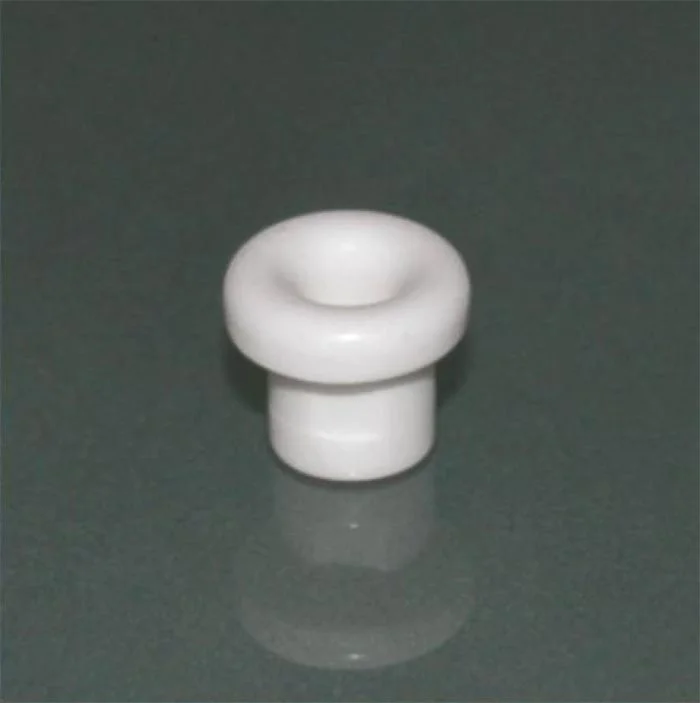
Eyelet Guides
Ceramic eyelets used at the points where yarn and wire pass through. Different bore and body sizes adapt them to a range of mounting arrangements.
View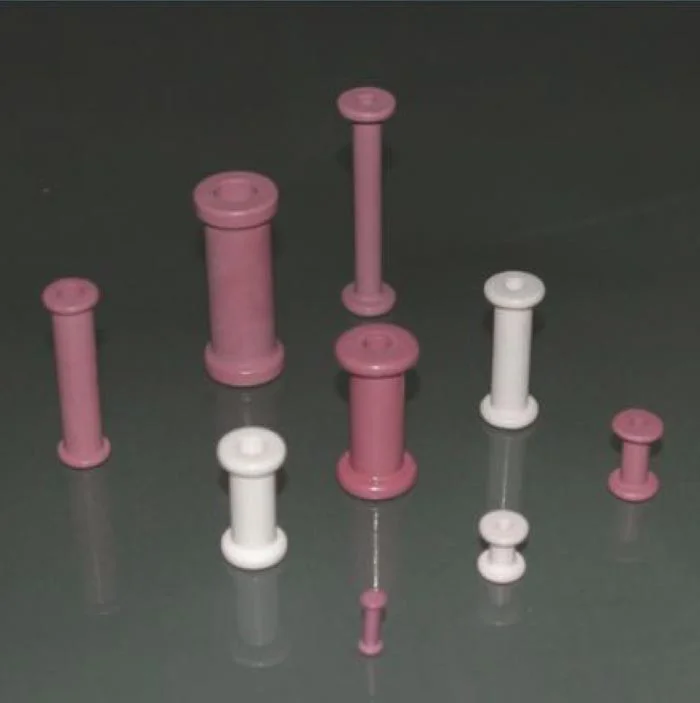
Rolling Guides
Ceramic rollers used to steer yarn and wire. The working surface and the connection dimensions are chosen according to the application.
View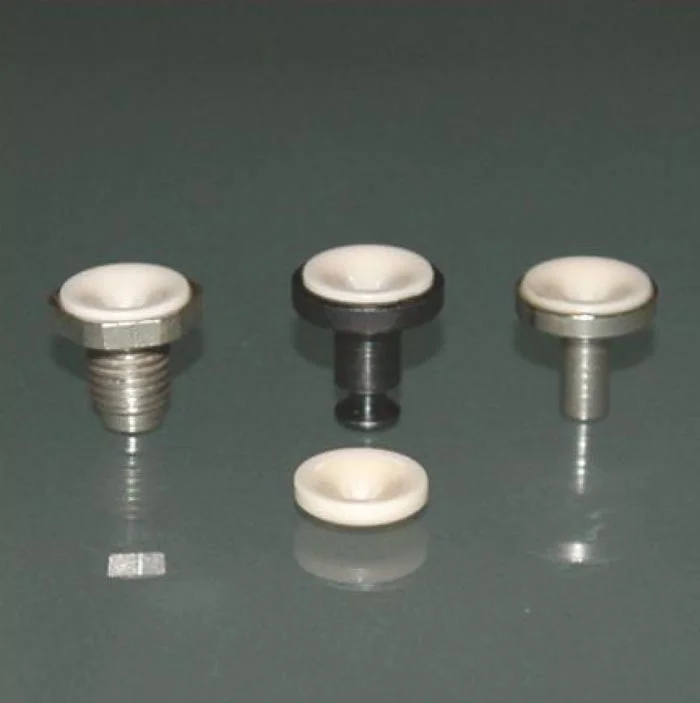
Take-Off Guides
Ceramic take-off guides with a central bore, used where the yarn passes through. The right model is determined by the pass-through geometry and the mounting dimensions.
View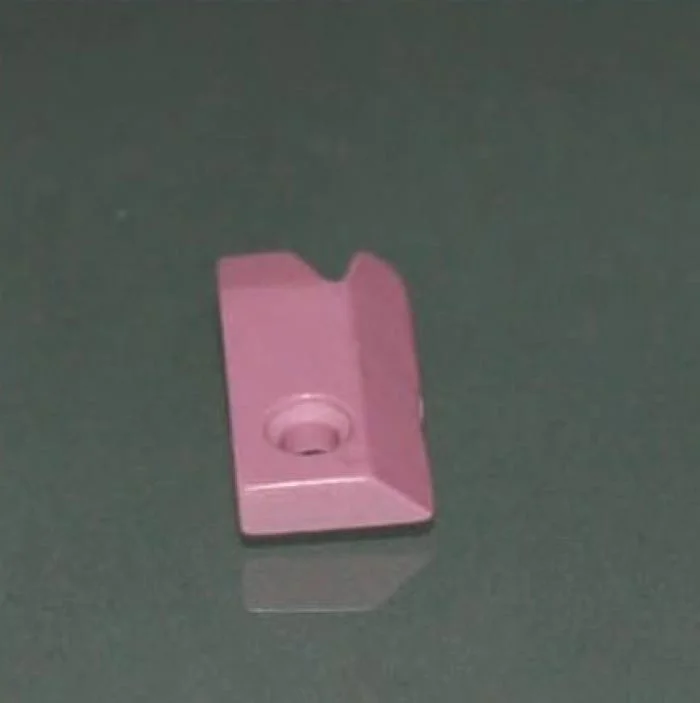
Slipper Guides
Ceramic guides that steer the yarn with a channel-shaped contact surface. The channel profile and the body dimensions are chosen to suit different machine arrangements.
View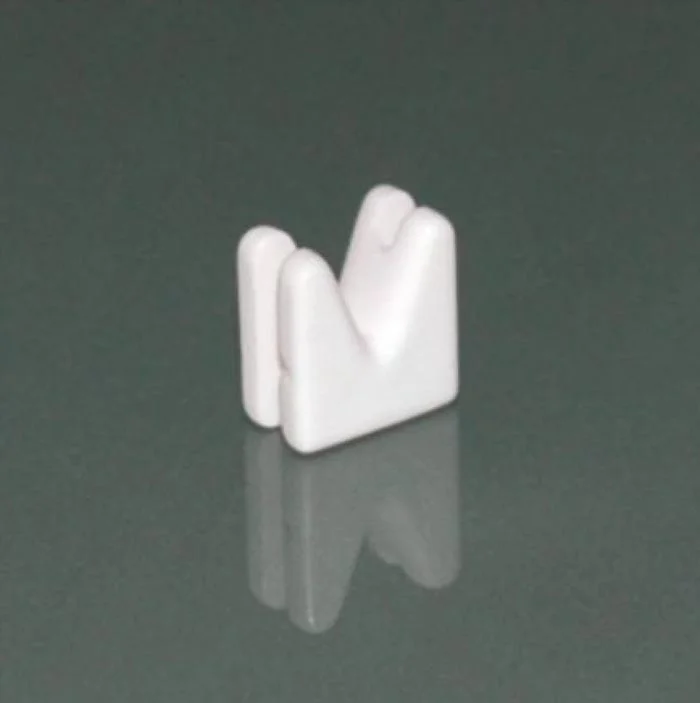
U Guides
Ceramic guides whose open or slotted form makes threading the yarn easier. Different sizes are offered to suit the yarn path and the mounting arrangement.
View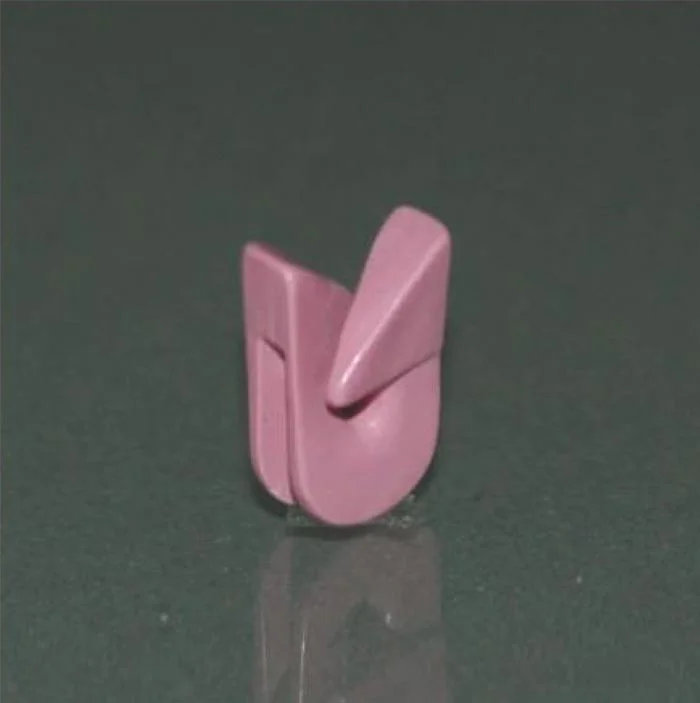
Trap Guides
Ceramic parts with a claw that help keep the yarn inside the guide. Selected according to the mouth opening, the channel and the mounting dimensions.
View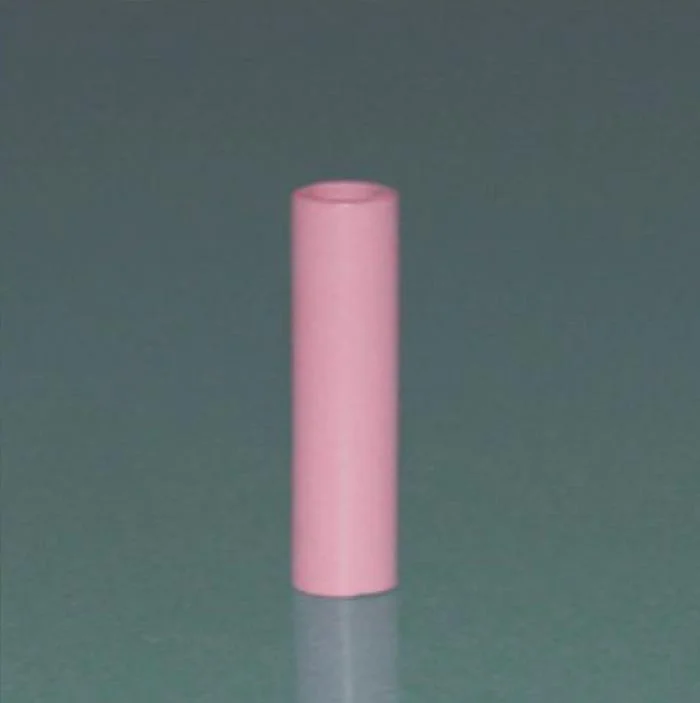
Tube Guides
Tube-shaped ceramic guides used where yarn and wire pass through the machine. Selected according to the inside diameter, the length and the end geometry.
View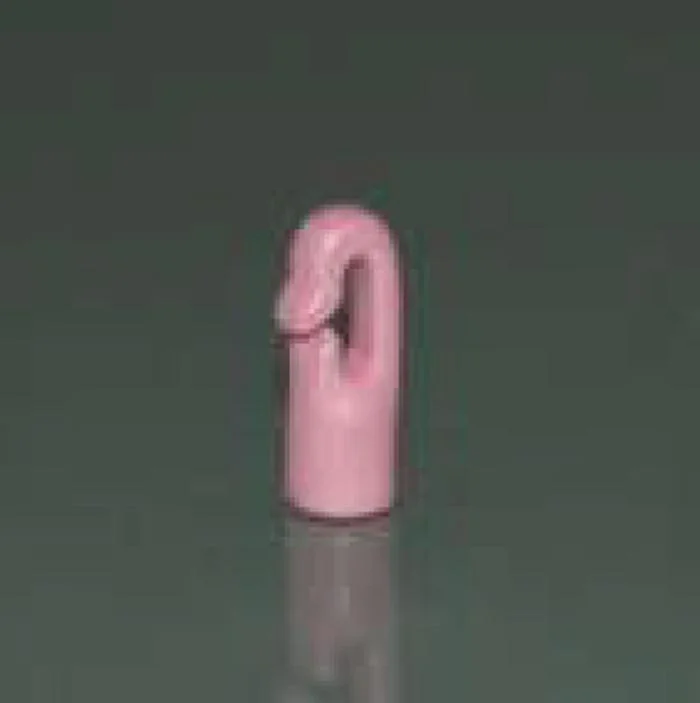
Hook Guides
Ceramic guides whose open hook form makes threading the yarn easier. They come in different shapes to suit the yarn path and the mounting direction.
View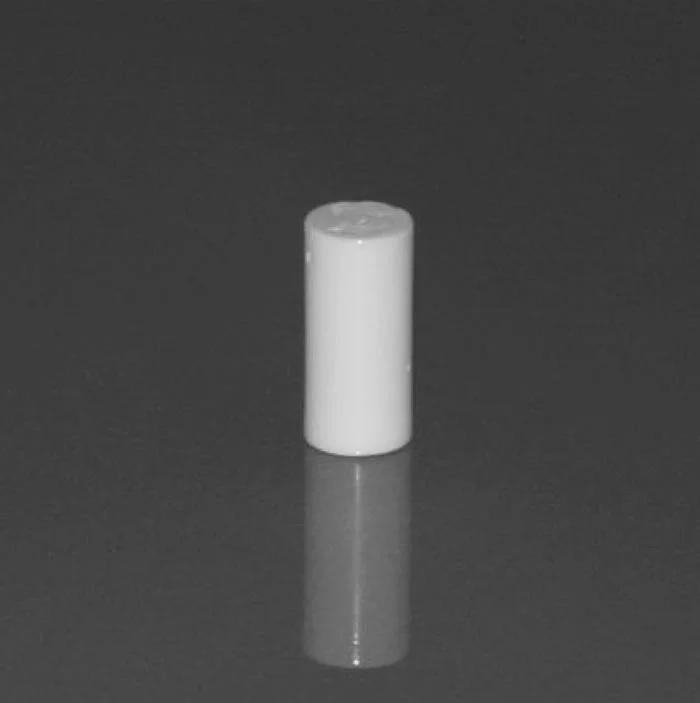
Rod Guides
Ceramic rods over which yarn or wire is passed and steered. The diameter, the length and the contact arrangement are determined by the application.
View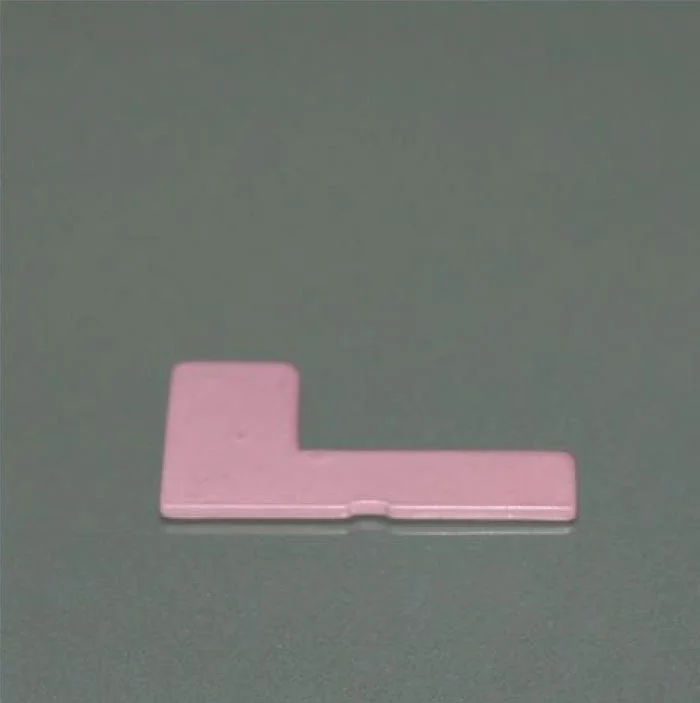
Special Guides
Special-shaped ceramic guides produced for different machines and applications. Alongside the catalogue models, requests for production to a drawing are assessed.
View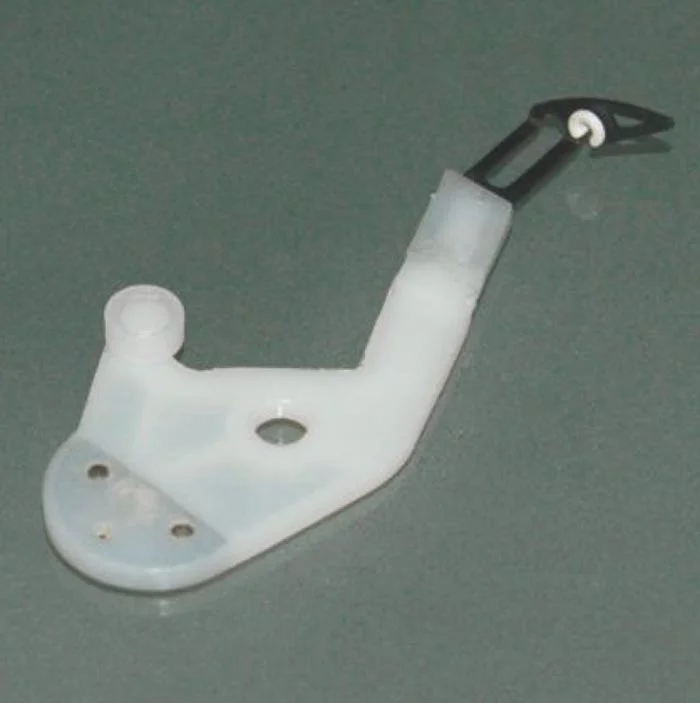
Traverse Guides
Guide assemblies that steer the yarn across the winding width on winding lines. The ceramic contact part and the carrier components are assessed together.
View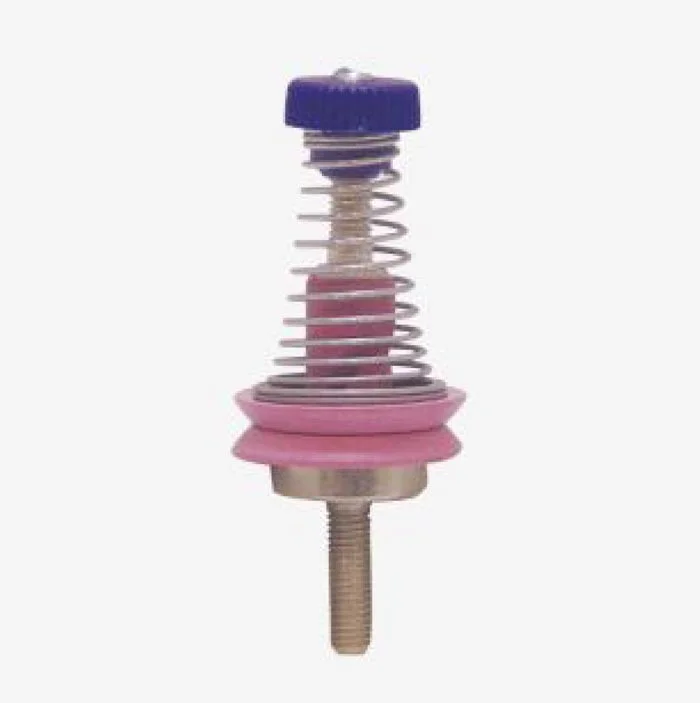
Brake Guides
Guide and brake assemblies used to set yarn tension. Supplied together with their ceramic contact faces and adjusting components.
View
Why does the surface in contact with the yarn matter?
The yarn runs over the guide surface under tension. The hardness and roughness of the surface directly affect how stable that passage is.
- High hardness gives resistance to surface wear under continuous yarn passage.
- The required surface roughness can be set on the ceramic.
- E-TY offers surface properties suited to filament yarns, E-TB electrical conductivity.
Guides on POY and texturing lines
In POY (partially oriented yarn) production the zone where the spin finish is applied is a separate application. Channel shape, entry and exit geometry and the contact surface determine how a multifilament bundle passes through this zone.
In some systems the spin finish is delivered through an applicator; in others the yarn contacts a roller. The channel of a part that delivers liquid does not serve the same function as the channel of a part that only guides the yarn.
The guides used on POY lines are mostly found in the Special Guides group. The suitable code is determined together with the point of use and the drawing of the current part.
Size ranges in the catalogue
| Group | Products | Part diameter Ø (mm) |
|---|---|---|
| Eyelet Guides | 633 | 0.3 – 79.3 |
| Rolling Guides | 247 | 1.3 – 168 |
| Take-Off Guides | 13 | 2.4 – 29 |
| Slipper Guides | 83 | 0.7 – 15 |
| U Guides | 321 | 0.5 – 13.5 |
| Trap Guides | 83 | 1 – 11.7 |
| Tube Guides | 338 | 0.7 – 90 |
| Hook Guides | 34 | 1.2 – 14.2 |
| Rod Guides | 138 | 1.3 – 19.3 |
| Special Guides | 495 | 0.5 – 120 |
| Traverse Guides | 101 | 1.5 – 20 |
| Brake Guides | 102 | — |
The values are the smallest and largest part diameters (Ø) in the catalogue; they do not indicate the diameter of the yarn or wire being processed.
Frequently asked questions
Why a ceramic guide?
A ceramic surface is far harder than metal. Even where the yarn runs over the same point continuously, the surface stays intact for a long time, and the yarn takes less damage.
Which yarns are they used with?
With natural yarns such as cotton and wool, with synthetic filaments and with textured yarns. Eyelet diameter and surface are produced according to the structure of the yarn.
What can be done about static electricity in the yarn?
A conductive titania ceramic (E-TB) is produced; it helps carry the static charge away. It works together with the earthing of the line.
Can a size not found in the catalogue be produced?
Yes. Dimensions and quantity are sent through the “Custom Production Request” button on the product page; where a drawing or a sample is available, production follows it.